Dennis Hitchcock ~ Harwood, MT
Former USS Hassayampa (AO-145) Crew Member
Vietnam was and is the defining
period of my life. I had joined the U.S. Navy to get out of
Montana where I was born and raised. The Gulf of Tonkin incident
happened while I was in boot camp - August 1964. By April 1965 I
was sitting off the coast of Vietnam watching the first big
contingent of Marines go ashore.
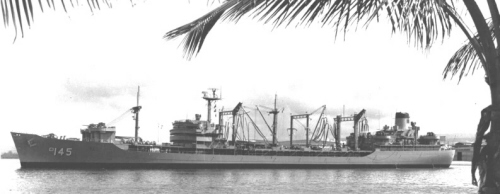
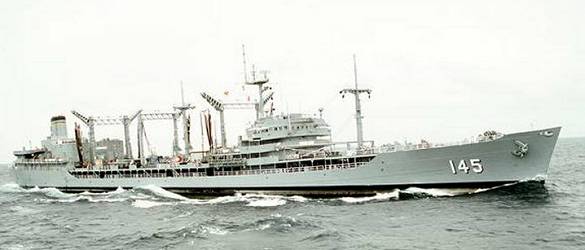
I was stationed on an oiler - the
USS Hassayampa. Over the course of the next two years and
two cruises to the area I spent about 15-16 months in the
official war zone. We refueled all kinds of ships, from aircraft
carriers to minesweepers. While we were never in any real
danger, evidence of the war was all around us ranging from the
Soviet "fishing trawlers" that shadowed us to just
sitting back with a can of Coke and watching the action ashore
with high powered field glasses we'd buy at the base exchange.
While I was in the Navy I hadn't
thought much about whether the war was right or wrong or even
whether we were winning or losing. I was in from age 17 until I
turned 21. My needs were pretty basic: beer, women, and work.
The Navy supplied all three.
When I came home in August of
1967 things began to change. I couldn't understand what the
protests were about. At the same time I began to have vague
feelings of unease about why so many people were dying, so far
away, and for what?
By the summer of 1968 I was
working for a major airline at the San Francisco Airport. United
Airlines had the MAC contract to bring back the coffins from
Vietnam. Over the course of the summer I counted the coffins and
tried to match them to the news reports about casualties. The
numbers never did line up. There were always more coffins than
were being reported in the news media. I came to distrust the government
and the military that had sent me and so many others to Vietnam.
I also came to feel guilty about
the fact that I had gone through the fringes of the war but was
never really in harm's way even though so many others were. I
felt - and still feel - that in some way I let others fight for
me.
I was married in June of 1968 and began going to a local
community college that same fall. Ronald Reagan was right about
one thing - the California college system helped turn me into a
radical. Within two years I was an organizer for the Vietnam
Veterans Against the War (VVAW).
The San Francisco Bay Area was a
focus of the anti-war movement. One of your commentators hit the
nail on the head though - VVAW was really an organization apart
from much of the rest of the anti-war movement. I mean I was
married, had two kids, was a veteran and worked full time. I
came to be very politically left in my thinking, but would go to
many meetings and stare in amazement and amusement at what
others were saying and doing.
This is not to say that my life
wasn't changed forever. I truly believed that there could be
substantive political change and that it could come out of the
"movement." I believed this so deeply that by 1976 -
after we had pulled out of Vietnam - I enrolled in night law
school. The reason? To be a movement lawyer. By the time I
graduated in 1980 and passed the California bar exam in 1981 the
movement was dead. In the meantime I had burned out my marriage
and by 1983 was divorced. ...
As I said in the beginning,
Vietnam changed my life. It was my primary focus for ten years
and shaped my political and moral values. I could have been
anything - a Montana farmer, a blue collar worker, an
advertising executive, or even a manger.
Instead, my life's work
continues. It's not that different from that 1968 summer I spent counting coffins.
|